In This Article
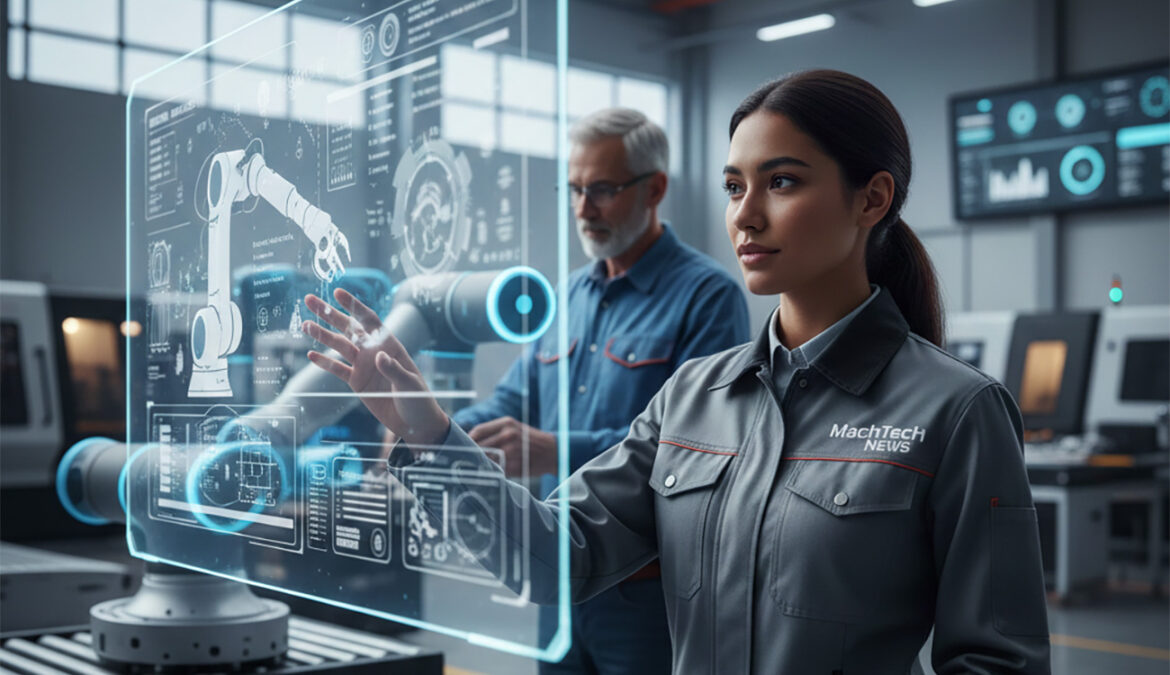
Imagine a CNC operator who spends more time coding a robotic arm or analyzing data trends than turning a manual handle. This isn’t a scene from a science fiction movie; it’s the daily reality in modern plants from Ohio to Bavaria. We are witnessing a fundamental redefinition of the industrial worker, where the hybrid workforce is no longer a goal – it is a survival strategy.
Manufacturing is not just entering a new era; it is undergoing a structural shift. Across factories in the US, Europe, and Asia, traditional job titles are dissolving. Skills are blending, and the line between “blue-collar” and “white-collar” work is fading faster than many expected.
Watch how the synergy between humans and machines is reshaping the factory floor in real-time:
Why the Hybrid Workforce is the New Industrial Standard
The urgency behind this transformation is measurable. A joint study by Deloitte and The Manufacturing Institute warns that the U.S. manufacturing sector alone could face a deficit of 2.1 million skilled workers by 2030. Europe and Japan face similar pressures as experienced workers retire and younger generations gravitate toward digital-native careers.
At the same time, automation is expanding at record speed. The International Federation of Robotics (IFR) reports more than 550,000 new industrial robot installations annually – the highest number ever recorded. The fastest-growing category is collaborative robots (cobots), designed to work directly alongside people.
As we explored in our previous analysis on industrial workforce shortages, the combination of fewer workers and more advanced technology is reshaping the very nature of industrial work. When machines become smarter, the hybrid workforce must become more adaptable.
The Blurring Lines: From Gauges to Dashboards
Picture a machine operator from a decade ago. Their day revolved around physical gauges, levers, and mechanical adjustments. Today, that same operator might be navigating digital dashboards, interpreting sensor logs, and adjusting parameters through a Human-Machine Interface (HMI).
Several forces are converging to accelerate this shift:
- Aging workforces: Tacit knowledge is leaving the factory as veterans retire.
- Attracting talent: Gen Z looks for roles that feel technologically advanced.
- Rapid tech adoption: AI, IoT, and digital twins are entering factories faster than traditional training can handle.
- The need for agility: An operator who can reprogram a robot is now a massive competitive advantage.
From Operator to Programmer: The New Skill Matrix
The transition to a hybrid workforce can be intimidating, but it’s often more intuitive than it appears. An operator with 15 years of experience knows the line better than any algorithm. They understand the subtle signs of drift or the sound of a machine under stress.
Software is new. The logic of production is not. The emerging “Hybrid Technologist” blends three layers of expertise:
- Process Knowledge: The intuition built over years on the line.
- Digital Fluency: Navigating HMIs and understanding automation logic.
- Data Awareness: Reading trends and spotting predictive signals.
Training for the Future: A Strategic Imperative
Traditional training pipelines can’t keep pace. As a result, companies are building internal academies. A World Economic Forum report estimates that 60% of all employees will require retraining by 2027.
Training is no longer a “nice to have.” It’s a survival strategy for companies and workers alike. For many, the transition brings renewed confidence. They’re not being replaced by technology; they’re growing alongside it.
The Future: Human-Machine Synergy
The future of manufacturing is not fully automated, nor is it a return to manual labor. It lives in the intelligent, collaborative space between the two – where human judgment meets digital precision. In that space, the new hybrid workforce is taking shape, one role at a time.
At MachTech News, we believe the human element will remain the heart of the factory, no matter how advanced the code becomes.
The Strategic Value of a Hybrid Workforce
Looking ahead, the success of Industry 4.0 depends less on the machines themselves and more on the people capable of operating them. A hybrid workforce provides the flexibility needed to pivot during supply chain disruptions or rapid shifts in consumer demand. Companies that invest in this human-centric digital transformation today will be the leaders of the global manufacturing landscape tomorrow.
Frequently Asked Questions
Hybrid Workforce
What is a hybrid workforce in manufacturing? It is a model where industrial workers combine traditional mechanical expertise with digital skills like data analysis and robot programming.
Why is the hybrid workforce becoming necessary? Due to the global labor shortage and the rapid adoption of Industry 4.0 technologies, factories need more versatile employees who can manage complex automated systems.