Introduction
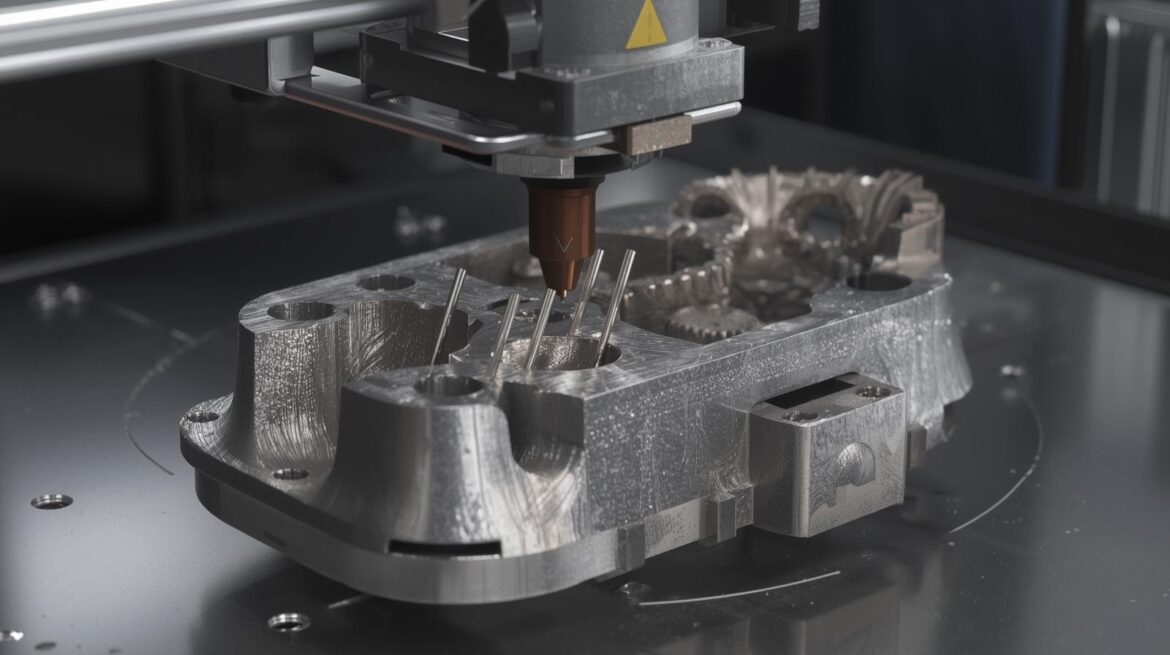
Additive manufacturing (AM), commonly known as 3D printing, is transitioning from a prototyping tool into a core manufacturing strategy within heavy industry. Companies in aerospace, automotive, energy, construction, and defense now rely on AM to produce complex, lightweight, and highly durable components that traditional manufacturing methods cannot easily replicate. As technology advances, 3D printing is reshaping how industrial machinery, spare parts, and large-scale structures are designed and manufactured.
Evolution of Additive Manufacturing in Heavy Industry
In recent years, additive manufacturing has evolved from small polymer-based printers to powerful industrial systems capable of printing metals, composites, ceramics, and even concrete. These advancements make AM a strategic asset for production environments with high customization demands and tight time constraints.
Key developments include:
- Advanced metal powders (titanium, nickel alloys, stainless steel)
- Hybrid CNC + additive machines
- Large-format printers for oversized industrial components
- Improved printing speeds and precision
Benefits of Additive Manufacturing for Industrial Sectors
Additive manufacturing offers several benefits that traditional subtractive methods cannot match.
Design Freedom and Complex Geometries
AM allows engineers to produce intricate internal channels, lattice structures, and lightweight parts that improve performance.
Reduced Material Waste
Since parts are built layer-by-layer, material usage is significantly lower than subtractive machining.
Faster Prototyping and Production
Industrial companies can shorten development cycles from months to days.
On-Demand Spare Parts
AM enables decentralized production of spare components, reducing inventory and downtime.
Applications Across Heavy Industry
Aerospace and Defense
- Lightweight structural parts
- Fuel nozzles and turbine components
- Rapid tooling and repair solutions
Automotive and Transportation
- Custom fixtures and tooling
- Lightweight metal brackets and housings
- Small-batch production of specialty parts
Energy Sector
- Heat exchangers with complex internal structures
- Turbine blades and combustion components
- Repair of worn-out industrial machinery parts
Construction & Large-Scale Projects
- 3D printed bridges, walls, and concrete structures
- Modular building elements
- Customized architectural components
Challenges and Limitations
Despite its advantages, additive manufacturing faces several constraints before full-scale adoption.
Material and Mechanical Properties
Printed metal parts require strict quality controls to match traditional forged or cast components.
High Initial Costs
Industrial metal 3D printers and materials are expensive, which limits access for smaller manufacturers.
Certification and Standards
Industries such as aerospace require rigorous testing and compliance procedures for AM components.
Skill Requirements
Operators must be trained in design for additive manufacturing (DfAM), machine operation, and post-processing.
The Future of Additive Manufacturing in Heavy Industry
The future of AM is defined by larger machines, hybrid manufacturing processes, automation, and AI-driven quality monitoring. Key trends include:
- Fully automated AM production cells
- Integration with robotics for post-processing
- Digital twins for simulation of printed parts
- Multi-material printing for stronger, more functional components
- Mass customization in industrial equipment manufacturing
As these innovations mature, 3D printing will become a mainstream manufacturing method for heavy industry.
Conclusion
Additive manufacturing is no longer a niche technology—it is a transformative force in heavy industry. Its ability to produce lightweight, complex, and custom components faster and with less waste positions AM as a critical part of the industrial landscape. Companies that adopt 3D printing early will benefit from lower costs, increased flexibility, and a significant competitive advantage.
References / Sources
Industry & Corporate Reports
- GE Additive – “Additive Manufacturing Applications in Aerospace and Industry”
- Siemens Digital Industries – “The Role of Additive Manufacturing in the Future of Production”
- EOS GmbH – “Metal 3D Printing for Industrial Manufacturing”
- SLM Solutions – Technical briefs on laser powder bed fusion technologies
- Renishaw – “Industrialization of Additive Manufacturing”
Research & Standards
- ASTM International – F42 Committee on Additive Manufacturing Technologies
- ISO/ASTM 52900:2021 – Standard Terminology for Additive Manufacturing
- MIT Additive Manufacturing Laboratory – Research papers on metal AM
- McKinsey & Company – “The Future of Additive Manufacturing”
- Wohlers Report (Annual industry analysis on AM market and technologies)