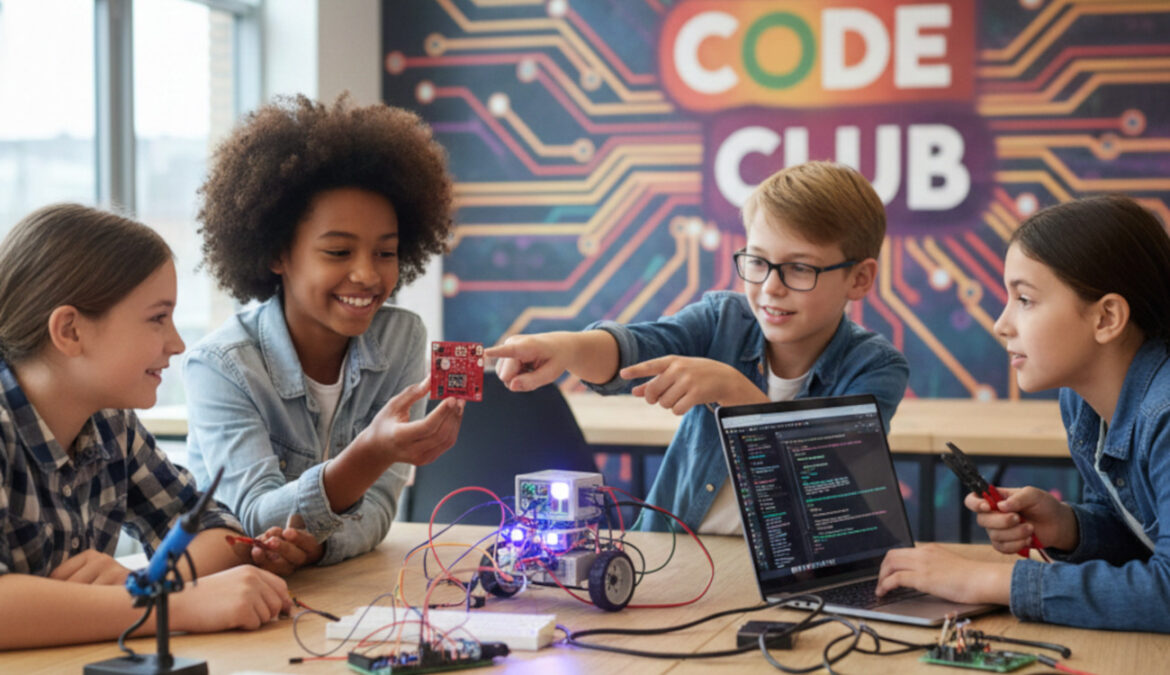
How initiatives like those from the Raspberry Pi Foundation help young people understand technology instead of fearing it
In This Article
A generation living in the future of others
Digital literacy is the foundation upon which the next generation is building its future. Children today grow up in an environment where technology isn’t a separate subject – it’s the backdrop of their entire lives. They communicate through screens, learn through digital platforms, play in virtual worlds, and navigate information that updates faster than they can absorb it.
This raises a crucial question: How do we help children understand technology, rather than simply consume it?
Digital literacy is no longer a specialist skill
A decade ago, programming or data literacy sounded like niche competencies reserved for engineers. Today, they’re part of general culture. Not because every child must become a developer, but because technology shapes nearly every field – from healthcare to design.
“Digital literacy isn’t about turning kids into coders. It’s about helping them understand the systems that shape their lives.” – Dr. Aisha Rahman, education researcher, UK
Digital literacy means understanding the logic behind the devices and platforms we use daily. It means being able to evaluate information critically, solve problems creatively, and use technology as a tool rather than a crutch.
Making technology understandable – not intimidating
One of the biggest challenges in tech education is that it often starts with abstractions. Children are introduced to complex terminology long before they see how any of it connects to their world.
This is where the Raspberry Pi Foundation stands out. The organization has spent years proving that technology education can be accessible, practical, and deeply human.
What makes the Raspberry Pi approach different?
- Affordable, hands-on devices that let children build something real – a game, a robot, a weather station.
- Free learning resources written in clear, friendly language.
- Coding clubs where children collaborate, share ideas, and learn from one another.
- Projects with purpose, not abstract exercises.
This model turns digital literacy from something “complicated” into something “understandable”.
From something “intimidating” into something “inviting”.
From something “foreign” into something “personal”.
From Magic to Logic: A Mentor’s Observation
To understand how this process works in practice, we look at the experience of Jason Miller, a volunteer mentor at a Code Club in Oregon. In an interview for the Raspberry Pi Foundation’s annual report, he shares his observations on how students build their digital literacy:
What’s the biggest change you see in kids? “Confidence. They walk in thinking programming is some kind of magic. A few weeks later, they’re arguing about how to improve the logic in a game they built themselves.”
What motivates them the most? “Projects. When they see a robot move because of something they wrote, it clicks. They realize technology isn’t a mystery – it’s something they can shape.”
Children don’t need instructions – they need space
One of the most overlooked truths in tech education is that children aren’t afraid of making mistakes. Adults are.
Kids press buttons, experiment, break things, rebuild them. That’s how they learn.
“If everything worked on the first try, they’d get bored. The fun is in figuring it out.” – Jason Miller, Code Club mentor
When we give children room to explore, they begin to understand technology intuitively.
When we give them freedom to create, they begin to think like inventors.
When we support them instead of giving them ready-made answers, they begin to believe they can.
Technology as a tool for creativity
One of the biggest misconceptions is that technology makes children passive.
Used well, it does the opposite – it makes them more creative.
Children can:
- Compose music and animations
- Build their own games
- Design simple robots
- Analyze environmental data
- Create digital stories
- Automate small tasks at home
These aren’t “tech skills”. They’re thinking skills.
Building Creators, Not Consumers: A Parent’s Story
The real-world impact of digital literacy is best seen through the eyes of those on the front lines. In a global report by the Raspberry Pi Foundation, Laura Chen from Vancouver describes the shift she witnessed in her 10-year-old son:
What changed for your child? “He used to be hesitant about trying new things. Now he sets his own challenges. Last month he built a small device to remind us to water the plants. It wasn’t perfect, but it was his idea.”
What surprised you the most? “That technology made him more confident, not more dependent. He doesn’t sit in front of a screen to watch – he sits there to build.”
Digital Literacy for a Generation Living in a Different World
The children who assemble their first Raspberry Pi project today may become:
- Doctors using data to improve diagnoses
- Architects designing sustainable cities
- Teachers making learning more accessible
- Entrepreneurs solving problems we haven’t yet imagined
Tech education isn’t preparation for a specific career.
It’s preparation for life.
These children will one day manage the digital twins of tomorrow’s smart factories.
Conclusion: Ultimately, digital literacy is not a story about hardware; it’s a story about human growth
Technology education isn’t a race to learn as many programming languages as possible. It’s a way to give children confidence, curiosity, and the ability to understand the world around them.
Initiatives like those from the Raspberry Pi Foundation show that when technology is introduced thoughtfully, accessibly, and with respect for the child’s natural creativity, it can unlock potential in every young person – regardless of background or circumstance.
This isn’t a story about hardware. It’s a story about human growth.
Sources & Further Reading
- Raspberry Pi Foundation – https://www.raspberrypi.org
- Code Club – https://codeclub.org
- Raspberry Pi Education Projects – https://projects.raspberrypi.org
- Raspberry Pi Computing Education Research – https://www.raspberrypi.org/research