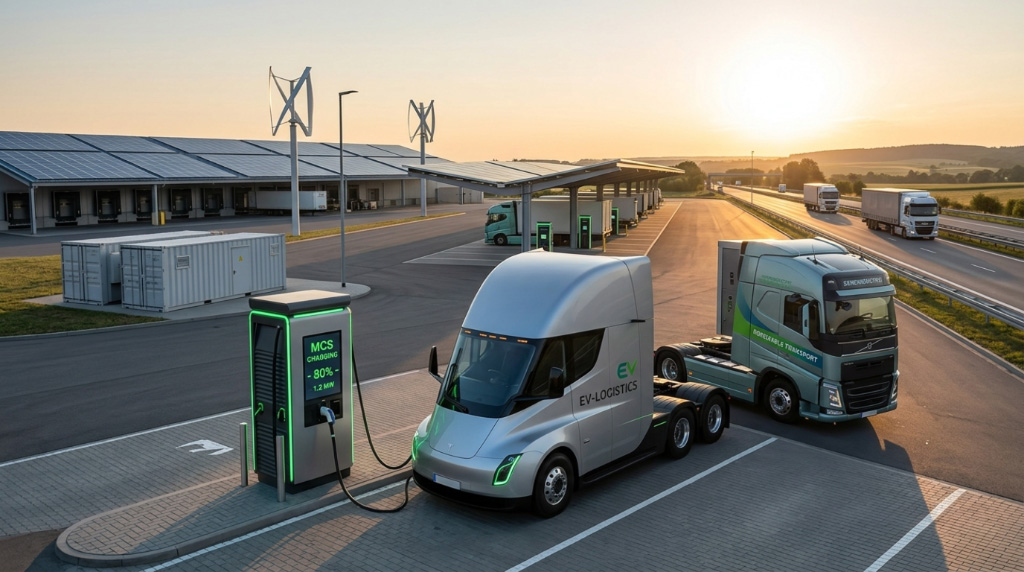
For more than a hundred years, diesel-powered trucks have been the backbone of global logistics, construction, and mining. Their engines shaped entire industries, supply chains, and national economies. But today, a profound transformation is underway. Electric Trucks – once considered impractical for heavy-duty operations – are rapidly becoming a strategic priority for manufacturers, fleet operators, and governments worldwide. This shift is not driven by environmental sentiment alone. It is driven by economics, energy security, and the need for operational resilience in an increasingly volatile world.
Electric Trucks are no longer a futuristic concept. They are the beginning of a new industrial era.
In This Article
The Technology Breakthrough: Batteries, Megawatt Charging, and New Standards
The rise of Electric Trucks is possible because several technologies matured simultaneously.
Battery innovation
Energy density has increased, charging cycles have improved, and thermal management systems now allow batteries to operate reliably under extreme loads and temperatures. Heavy-duty trucks can now carry battery packs capable of powering 40-ton vehicles over hundreds of kilometers.
Megawatt Charging Systems (MCS)
The introduction of MCS is a turning point. Unlike traditional fast chargers (250–350 kW), MCS delivers over 1 MW of power – enough to recharge a heavy truck during a driver’s mandated break or a shift change. This makes Electric Trucks viable for long-haul logistics and mining operations that run 24/7.
Grid integration and microgrids
Modern charging hubs combine renewable energy, battery storage, and smart load balancing. This reduces peak demand, stabilizes local grids, and allows companies to operate even in remote areas.
These technological advances are the foundation of the global shift to Electric Trucks – a shift that is accelerating faster than many expected.
The Business Logic: Why Companies Are Electrifying Their Fleets
The transition to Electric Trucks is not just a technological upgrade. It is a business decision with long-term strategic implications.
Lower operational costs (OPEX)
Electric drivetrains have fewer moving parts, no oil changes, no exhaust systems, no turbochargers, and no complex transmissions. Maintenance costs drop by 20–40%, and electricity – especially renewable – is more predictable and often cheaper than diesel.
Higher uptime and reliability
Electric Trucks experience fewer mechanical failures. For industries where downtime costs millions, reliability is a competitive advantage.
Regulatory and ESG pressure
Global companies face strict emissions targets for 2030 and 2050. Electrifying fleets is the fastest way to reduce Scope 1 emissions, especially in logistics and mining.
Predictable long-term costs
Electricity prices are more stable than diesel, which is tied to geopolitics and global markets. This allows companies to plan with greater financial certainty.
Electric Trucks are not just cleaner – they are economically smarter.
To better visualize the shift in operational priorities, the following table compares the fundamental differences between traditional diesel fleets and the emerging electric standard:
| Feature | Diesel Trucks (Traditional) | Electric Trucks (Future Standard) | Strategic Advantage of Electric |
| Operational Costs (OPEX) | High: complex engines, oils, filters, and transmission maintenance. | Low: 20–40% reduction in maintenance; significantly fewer moving parts. | Direct boost to fleet profitability and margins. |
| Energy Security | Vulnerable: Tied to global oil prices, refinery stability, and geopolitics. | High: Powered by local grids, renewables (solar/wind), and microgrids. | Shield against fuel supply disruptions and price volatility. |
| Refueling / Charging | Fast refueling, but 100% dependent on external fossil fuel supply chains. | MCS (Megawatt Charging): Recharges in 30–45 min during mandatory driver breaks. | Operational optimization and energy self-sufficiency. |
| Environmental Impact | High CO2/NOx emissions and noise; subject to increasing carbon taxes. | Zero Tailpipe Emissions: Silent operation; full compliance with ESG/Net-Zero goals. | Access to low-emission urban zones and superior brand reputation. |
| Reliability (Uptime) | Risk of mechanical failure in complex Internal Combustion Engines (ICE). | Superior: Electric drivetrains are more resilient under heavy 24/7 duty cycles. | Minimizes costly downtime in logistics and mining. |
Energy Security: Eliminating the Biggest Risk in Diesel Logistics
Diesel supply chains are fragile. They depend on a global infrastructure that is:
- Geopolitically unstable
- Dependent on maritime corridors
- Vulnerable to conflicts
- Concentrated in a limited number of refineries
- Sensitive to sanctions and blockades
When fuel cannot reach refineries or terminals, operations stop. This has happened before and is happening now worldwide – disrupted deliveries due to conflicts, blocked sea routes and ports, refinery strikes, or natural disasters. In such moments, diesel becomes a critical bottleneck that can paralyze entire industries.
Electric Trucks eliminate this single point of failure. They can operate on:
- Local electrical grids
- Renewable energy sources
- Microgrids
- On-site battery storage
- Hybrid energy hubs
This makes electrification not only a technological upgrade, but a strategic shield against global energy disruptions.
Logistics: The First Sector to Feel the Shift
Electric Trucks are already reshaping logistics networks.
- Tesla Semi is operating in PepsiCo’s long-haul routes.
- Volvo FH Electric is deployed across Europe for regional transport.
- Mercedes eActros is used by DHL and other major carriers.
- Scania Electric trucks are running in Scandinavia under harsh winter conditions.
These deployments prove that Electric Trucks can handle real-world logistics – from last-mile delivery to long-haul freight.
The logistics sector is becoming the first large-scale proving ground for the global electrification of heavy transport.
Mining: The Heaviest Category Enters the Electric Era
Mining is one of the most energy-intensive industries in the world – and one of the most difficult to decarbonize. Yet it is also where Electric Trucks show some of their greatest potential.
Caterpillar and Komatsu are investing billions in battery-electric haul trucks, supported by mining giants like Rio Tinto, BHP, and Vale. Their prototypes – weighing 250 to 400 tons – are already completing full operational cycles on battery power.
Megawatt Charging Systems allow these massive Electric Trucks to recharge during loading or shift changes, enabling continuous operation. Combined with autonomous driving systems, the mining sector is moving toward a fully electric, fully automated future.
This transformation will redefine the economics of mining for decades to come.
While the transition is inevitable, it is not without its hurdles. Below is a summary of the primary barriers to adoption and the strategic solutions being deployed to overcome them:
| Barrier | Description | Strategic Solution |
| Upfront Cost (CAPEX) | Electric trucks have a significantly higher initial purchase price than diesel. | Leasing models, government subsidies, and rapid ROI through lower energy/maintenance costs. |
| Battery Weight | Large battery packs can reduce the available payload capacity in some sectors. | Rapid improvements in energy density and regulatory weight exemptions for EVs. |
| Grid Capacity | High-power charging for large fleets can strain local electrical grids. | Investment in on-site battery storage (BESS), smart load balancing, and microgrids. |
| Charging Infrastructure | Lack of high-speed MCS (Megawatt) chargers on major global freight corridors. | Strategic public-private partnerships and proprietary charging hubs (the “Competitive Moat”). |
Infrastructure: The Biggest Challenge and the Biggest Opportunity
Electrifying heavy transport requires more than trucks. It requires an entirely new energy ecosystem:
- Charging hubs
- Microgrids
- Renewable energy integration
- Large-scale battery storage
- Smart grid management
This infrastructure is expensive, but it creates long-term strategic advantages:
- Lower energy costs
- Greater resilience
- Reduced dependence on fossil fuels
- Improved operational continuity
For many companies, infrastructure investment is not a cost – it is a competitive moat.
The Beginning of a New Industrial Era
Electric Trucks are not just a new category of vehicles. They represent a fundamental shift in how heavy transport is powered, financed, and operated. They offer lower costs, higher reliability, and protection against global energy disruptions. They align with ESG goals and prepare companies for a future where diesel will be increasingly expensive and heavily regulated.
The transition will not happen overnight. But the direction is clear. The companies that embrace Electric Trucks today will define the standards of tomorrow – in logistics, construction, mining, and beyond.