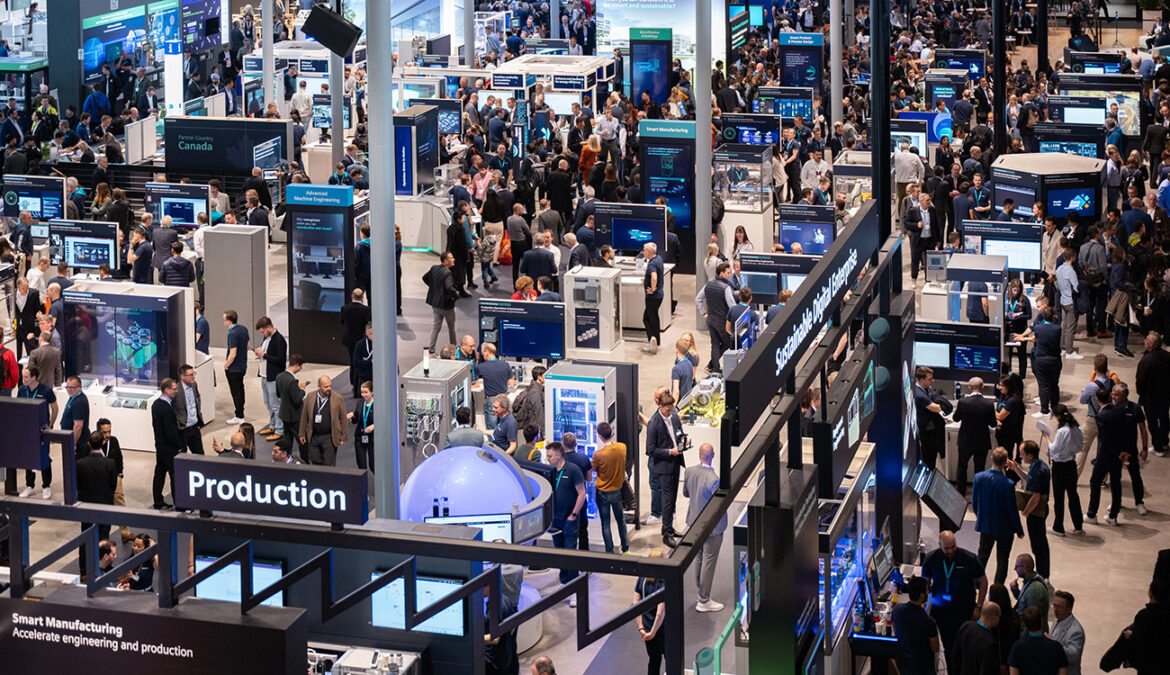
AI, Robots, and the New Industrial Order: What to Expect on the Fairground
20-24 April 2026, Hannover, Germany
Hannover Messe 2026 arrives at a defining moment for global industry. Europe is pushing for technological sovereignty, manufacturers are racing to adopt AI‑native systems, and the energy crisis has turned efficiency from a sustainability goal into a survival metric. According to the official program released by Deutsche Messe AG, this year’s edition places unprecedented emphasis on interoperability, data spaces, and energy‑aware production.
This guide is designed to help you navigate the scale and complexity of the world’s largest industrial fair – and focus on the areas that deliver the highest value in 2026.
In This Article
How to Use This Guide
This is not a hall‑by‑hall overview. It’s a priority map – a curated look at the zones, technologies, and demonstrations that matter most for manufacturers evaluating automation, digitalization, and energy transformation.
Use it to plan your route, benchmark your strategy, and ensure you don’t miss the developments shaping the next decade of industrial production.
Before You Go: What’s New in 2026
Hannover Messe has restructured its layout for 2026. The traditional split between “Digital Ecosystems” and “Automation” is gone. Instead, the fair now presents end‑to‑end manufacturing flows, where hardware, software, and data infrastructure appear as one continuous system.
Three themes dominate the official 2026 agenda:
- Interoperability, driven by Manufacturing‑X
- AI‑native automation, with hardware designed for machine learning
- Energy resilience, including hydrogen, electrification, and carbon‑aware production
If 2025 was about experimentation, 2026 is about consolidation. Exhibitors are showcasing what already works – not what might work someday.
Navigating the Fairground: Your Starting Point
The redesigned layout can feel overwhelming, but there’s one reliable rule for 2026:
Start in the East Wing
This is where the highest‑integration demos are concentrated – real production cells, not conceptual showcases. Expect to see:
- Multi‑vendor robotic lines
- AI‑driven quality inspection loops
- Digital twins connected to live equipment
- Predictive maintenance dashboards using real factory data
If your time is limited, this zone gives you the clearest picture of where manufacturing is heading.
Insider Tip: Behind the massive stands of the industry giants, look for the SME Solutions hubs. These smaller booths often showcase the most practical, ROI‑ready technologies – especially for companies seeking scalable automation rather than full‑scale digital transformation.
Manufacturing‑X: The Data Backbone of 2026
You’ll see the term Manufacturing‑X everywhere – banners, demo walls, keynote stages. It’s not marketing. It’s the central theme of the fair, highlighted explicitly in the official 2026 program.
Manufacturing‑X is Europe’s push for a shared industrial data space – a framework enabling machines, software platforms, and entire factories to exchange data securely. This initiative is a core pillar of the Industry 4.0 roadmap for the next decade.
For visitors, this means one thing: Expect fewer closed systems and more real interoperability.
What to look for
- Live testbeds where Bosch Rexroth, Siemens, SAP, and others run equipment from different brands on a single shared dashboard.
- Plug‑and‑produce demonstrations showing how new machines can be integrated into a line in minutes.
- Data governance tools that help manufacturers control access and visibility across partners.
This is the closest the industry has come to a true “European Cloud” for manufacturing.
AI‑Native Hardware: Beyond the Buzzword
AI is no longer a software layer added on top of machines. In 2026, vendors are showcasing AI‑native hardware – equipment designed from the ground up to run machine learning models locally, without cloud latency.
Expect to see:
- Vision systems that retrain themselves on the line
- Robots that adjust motion paths based on real‑time variability
- Controllers with built‑in neural accelerators
- Quality inspection systems that learn from operator feedback
These aren’t prototypes. They’re production‑ready systems aimed at reducing scrap, downtime, and manual tuning.
Why it matters: AI‑native hardware is becoming the new baseline for competitive manufacturing. Hannover Messe 2026 is the best place to benchmark your roadmap against global leaders.
The Hydrogen & Energy Pavilion: Mandatory in 2026
Even if your business has nothing to do with hydrogen, the Energy Solutions halls are essential this year. The energy crisis has forced manufacturers to rethink their entire cost structure, and Hannover Messe reflects that urgency.
What’s new
- Carbon‑tracking software integrated directly into CNC and robotic controllers
- Energy‑aware scheduling that adjusts production based on grid conditions
- Hydrogen‑ready industrial burners and furnaces
- Battery storage systems designed for factory‑level load balancing
In 2026, knowing the carbon footprint of every part you produce is becoming as important as the part’s tolerance. Expect dashboards showing energy consumption per cycle, per toolpath, per batch – in real time.
Hidden Gems: Where the Real Insights Hide
Hannover Messe is famous for its massive stands, but the most interesting insights often come from the smaller corners.
Don’t miss:
- Startup clusters with lightweight automation tools for SMEs
- Interoperability labs where engineers explain how they solved real integration challenges
- Hands‑on workshops for digital twins, robotics programming, and energy optimization
- University research booths – often the birthplace of next year’s breakthroughs
These areas are goldmines for practical ideas and early‑stage innovations.
Benchmarking Your Competitors: What to Observe
If you’re attending with a strategic mindset, pay attention to:
- How vendors talk about integration, not just features
- Whether solutions are scalable or just impressive demos
- How much emphasis is placed on energy efficiency
- Whether AI is used for real outcomes or just branding
- How SMEs are adopting digital tools compared to large enterprises
Hannover Messe is not just a showcase – it’s a barometer of where the industry is heading.
Final Checklist: Your 2026 Must‑See List
Before you leave the fairground, make sure you’ve seen:
- At least one Manufacturing‑X testbed
- A full AI‑native production cell
- A carbon‑tracking demo integrated into real machinery
- An SME Solutions hub
- A hydrogen or energy‑efficiency innovation relevant to your sector
- A startup solution that challenges your assumptions
These touchpoints will define manufacturing strategy in the next 3-5 years.
Stay tuned to MachTech News for live updates and deeper dives into these technologies during the event.
Final Verdict: Should You Go?
Hannover Messe 2026 marks a shift from the gadget era to the infrastructure era. You won’t see flying cars or sci‑fi robots. What you will see are the systems, standards, and architectures that will shape the next decade of industrial production.
It’s worth the trip – not for the spectacle, but for the benchmarking. Go to see how far your competitors have moved into digital transformation. And, more importantly, go to understand which of their mistakes you can avoid.
Sources & Useful Links
- Hannover Messe 2026 – Official Event Page
- Hannover Messe 2026 – Exhibitor & Hall Overview
- Hannover Messe 2026 – Program Overview
- Manufacturing‑X Initiative (Official Overview)