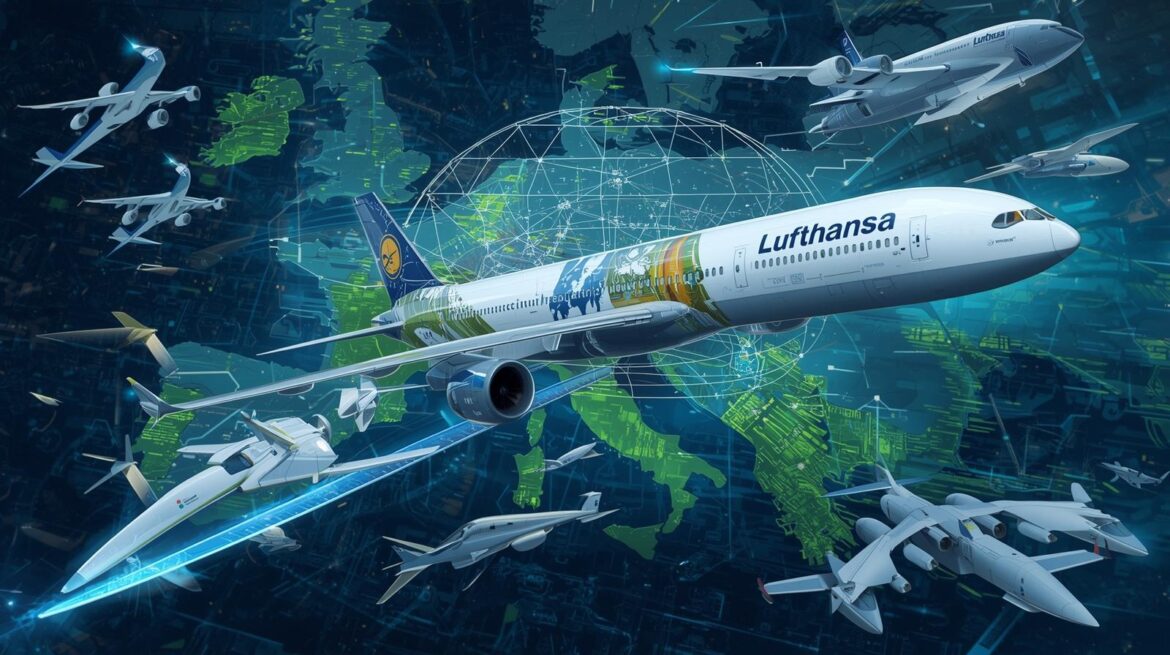
Europe’s aerospace ecosystem is in a phase of focused, pragmatic innovation. While the dream of hydrogen airliners and all-electric short hops still faces technical and infrastructure hurdles, established players — led by airlines, MROs and OEMs across Germany, France and the UK — are moving aggressively on three fronts: digitalisation of maintenance, near-term emissions reduction (SAF & efficiency), and propulsion R&D (electric, hybrid and hydrogen testbeds). Below is a concise update on what’s happening now, what matters for manufacturers and operators, and why Europe remains a technology leader in aircraft systems and services.
Lufthansa: digitising maintenance and leaning into SAF
Lufthansa Group and its maintenance arm, Lufthansa Technik, have pushed hard on digital transformation and AI-driven operations. The company is expanding its Digital Tech Ops ecosystem — adopting tools for predictive maintenance, digital twins and cloud-based workflows to shorten turnarounds and reduce unscheduled downtime. These investments aren’t just about convenience; they’re profitability levers for airlines facing tighter margins.
On the sustainability front, Lufthansa Group continues to scale its use of Sustainable Aviation Fuel (SAF) across operations and has formal programmes to source, blend and account for SAF use. These practical SAF deployments are the industry’s primary lever for near-term CO₂ reductions while long-term propulsion shifts mature.
Airbus & the hydrogen roadmap: progress – but realistic timelines
Airbus remains the most visible proponent of hydrogen propulsion in Europe with research programmes and concept designs (the ZEROe family) that investigate fuel-cell and cryogenic hydrogen architectures. The corporate message is clear: hydrogen has potential for deep decarbonisation, but the path is long and technically complex — timelines have been adjusted to reflect that reality. Europe’s OEMs are therefore balancing hydrogen R&D with accelerated SAF adoption and efficiency gains.
Engines & electric propulsion: Safran, Rolls-Royce and partners moving from demo to certification
Propulsion firms across Europe are running the experiments and, crucially, taking prototypes through formal certification paths. French groups (including Safran and partners) have demonstrated liquid-hydrogen turbine testbeds for light aviation, showing the basic feasibility of hydrogen combustion in turbine hardware. Simultaneously, electric-propulsion systems are seeing regulatory headway: Safran’s ENGINeUS electric motor family achieved a noteworthy European certification milestone for smaller aircraft classes. These demonstrations are stepping stones toward larger, certified systems for regional and niche aircraft.
Rolls-Royce and other UK/European engine groups are coordinating large-scale programs (public/private consortia) to prototype next-generation sustainable engine cores and to validate SAF-optimised combustors and hybrid architectures — efforts that aim to marry performance, lifecycle cost and lower carbon intensity.
What this means for OEMs, MROs and suppliers
- Digital first, hardware later. The quickest ROI today comes from software: better diagnostics, supply-chain visibility and predictive maintenance directly cut cost and AOG time. Firms that sell sensors, analytics or secure data platforms are in strong demand.
- SAF is the commercial bridge. Airlines and lessors will prioritise SAF contracts, blending capability and airport fuel logistics in the near term — a business opportunity for fuel producers, logistics specialists and systems integrators.
- Certification & standards matter. Experimental demos are useful, but scaling requires harmonised certification paths and cryogenic/hydrogen infrastructure standards — a market where suppliers able to help certify components will capture value.
Short checklist for a European aerospace supplier or machine-builder
Invest in digital twin and predictive-maintenance capability for your hardware lines.
Design components with SAF compatibility in mind (material chemistry, seals, and combustor tolerances).
Track regulatory developments for hydrogen cryogenics and electric powertrain certification — early compliancy roadmaps reduce time-to-market.
Build partnerships with MROs and airlines for field trials; pilots accelerate procurement and scale.
Bottom line
Europe’s aerospace industry is not pivoting to a single technological silver bullet. Instead, it’s executing a layered strategy: digitise operations today, scale SAF and efficiency measures tomorrow, and continue heavy R&D on electric/hydrogen propulsion for the longer term. Lufthansa’s practical investments in digital ops and SAF procurement, paired with OEM and engine-maker test programs, keep Europe at the front of aviation technology — even if commercial hydrogen flight remains a medium-term ambition rather than an immediate reality.
Sources & further reading (selected)
- Lufthansa Technik — Digital Tech Ops ecosystem and AI collaborations.
- Lufthansa Group — SAF programmes and Environmental Statement 2025.
- Airbus — ZEROe hydrogen aircraft research and programme updates.
- Safran / Turbotech — liquid-hydrogen turbine testbeds.
- EASA / Safran — electric engine certification milestones (ENGINeUS).
- Rolls-Royce and EU projects (UNIFIED / sustainable engines).