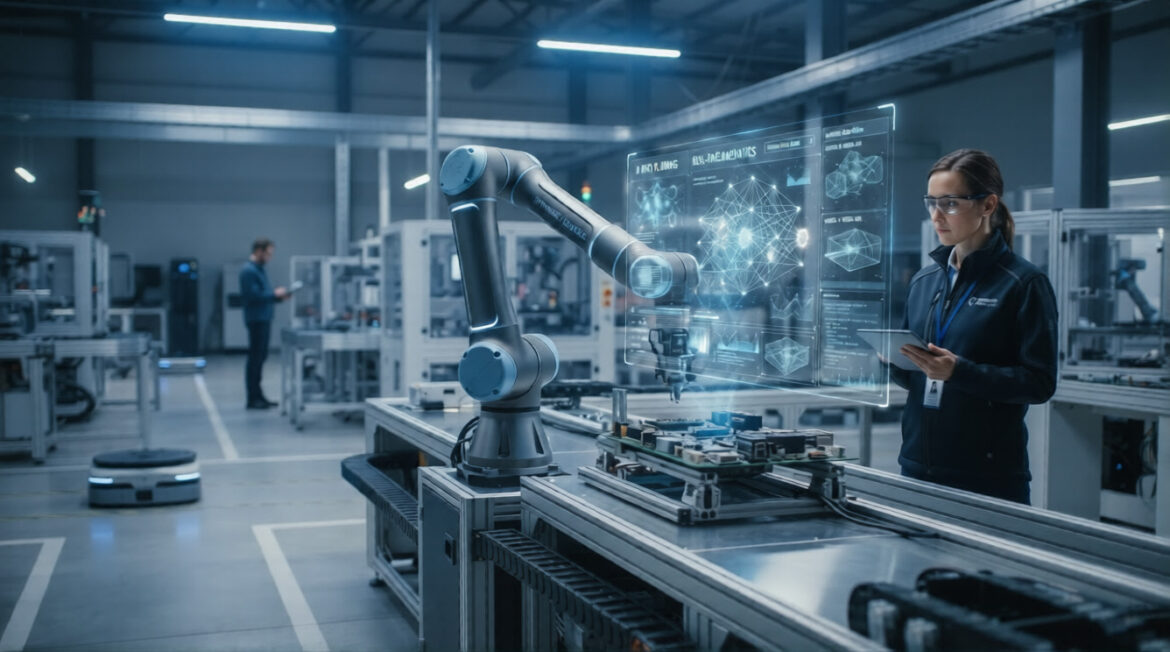
Google is strengthening its position in the emerging physical AI market by bringing robotics software company Intrinsic into its core business, a move that signals a broader shift in the company’s artificial intelligence strategy.
The decision marks a new phase for Google’s robotics strategy, as the technology giant looks beyond digital AI assistants and large language models toward intelligent machines capable of interacting with the physical world.
Intrinsic, originally developed inside Alphabet’s X research division, will now operate within Google while maintaining its own brand and leadership under CEO Wendy Tan White. The company was previously part of Alphabet’s “Other Bets” portfolio, which includes long-term technology projects outside Google’s main operations.
The move gives Intrinsic closer access to Google’s AI models, cloud infrastructure and engineering resources as the company works to create a software foundation for industrial robots.
In This Article
Google wants to create an Android moment for robotics
At the center of Google’s robotics strategy is an ambition similar to what the company achieved with Android.
Instead of building robots itself, Google wants to provide the software infrastructure that allows different manufacturers to develop and deploy intelligent robotic systems.
Android became successful by creating a common operating system used by smartphone manufacturers around the world. Intrinsic is pursuing a similar approach for robotics by creating software tools that can work across different types of robotic hardware.
The company says its platform is designed to help manufacturers and developers focus on solving industrial problems rather than building complex software systems from scratch.
Intrinsic has already established partnerships with major industrial robotics companies, including FANUC, Universal Robots and KUKA.
Physical AI becomes the next technology battleground
The expansion of Google’s robotics strategy comes as the technology industry shifts from generative AI toward physical AI – systems that allow machines to understand environments, make decisions and perform tasks in the real world.
While companies such as OpenAI, Google and Microsoft have focused heavily on AI models capable of generating text, images and code, the next stage of competition is moving toward AI-powered machines.
Factories, warehouses and logistics centers are expected to become some of the first major environments where physical AI will have a commercial impact.
Google believes its advantage comes from combining robotics software with its existing AI ecosystem, including Gemini models, Google Cloud infrastructure and research from Google DeepMind.
Competition grows in the AI robotics market
Google is entering an increasingly competitive market.
Tesla is developing its Optimus humanoid robot, Amazon continues expanding warehouse automation, and NVIDIA is positioning itself as a key provider of AI computing platforms for robotics companies.
NVIDIA’s approach focuses heavily on providing the computing infrastructure and simulation tools required to train advanced robotic systems, while Google’s strategy is centered around creating a flexible software platform that connects AI models with different types of robots.
The competition highlights a larger industry shift: the future of robotics may not be controlled by a single robot manufacturer, but by the companies that provide the intelligence layer powering thousands of machines.
Why Google’s robotics strategy matters
The potential market opportunity is significant. Analysts expect demand for general-purpose robotics to increase as companies look for ways to automate manufacturing, logistics and industrial operations.
According to McKinsey research, the market for general-purpose robots could reach hundreds of billions of dollars in the coming decades as artificial intelligence and automation technologies mature.
For Google, the challenge is turning years of AI research into practical industrial applications.
The integration of Intrinsic gives the company a stronger position in that race. If successful, Google’s robotics strategy could make Intrinsic a critical software platform for the next generation of intelligent machines – similar to the role Android played in transforming smartphones.
The next phase of Google’s AI ambitions
Google’s move into robotics reflects a broader effort to expand artificial intelligence beyond screens and servers.
The company has spent years developing some of the world’s most advanced AI technologies. Now, through Intrinsic, Google is attempting to connect those capabilities with machines operating in the physical world.
The success of this strategy will depend on whether Google can create an ecosystem attractive enough for robot manufacturers and developers – the same challenge the company faced when building Android.
The robotics industry is still in its early stages, but Google’s latest move suggests the company believes the next major AI platform may not live inside smartphones or computers.
It may move on wheels, arms and factory floors.